Find where your issue is on the table
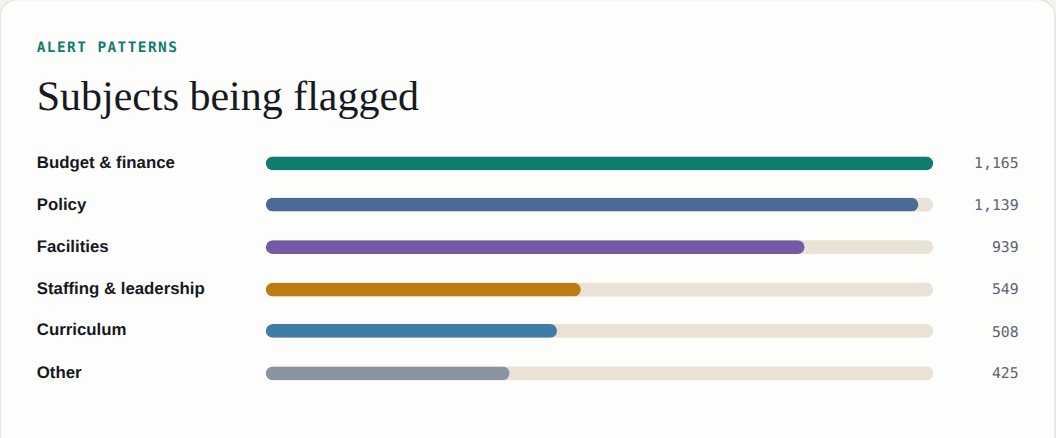
Compare published alerts about funding, staffing, curriculum, and other priorities to decide which district records your group should investigate.
 ourschoolboard.org
OurSchool for Advocacy Groups
Give your parent organization, student group, or community coalition the evidence to make its case. Find policy proposals, compare district approaches, and prepare public comment on the issues you organize around.
Research for your next campaign
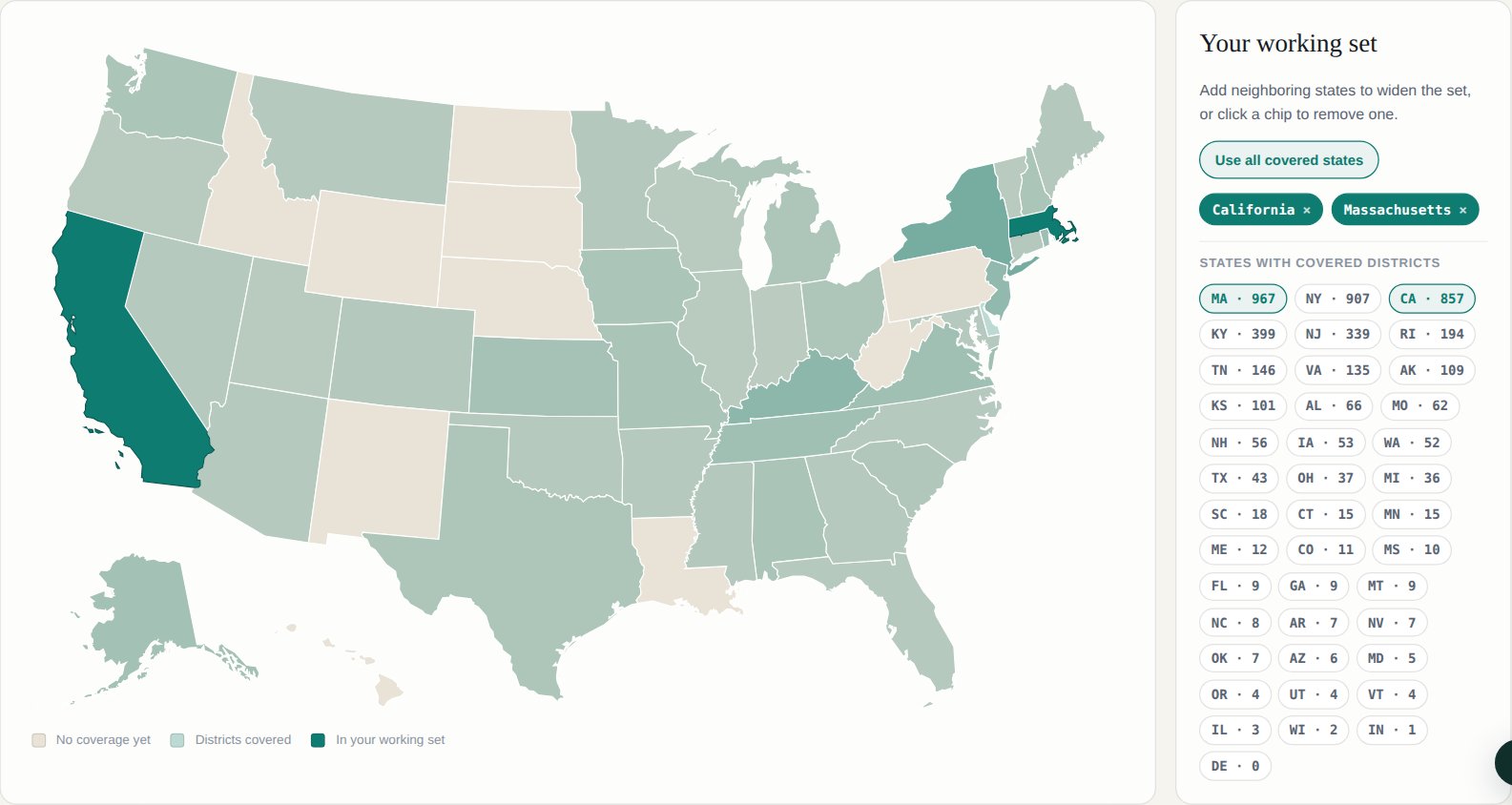
Use these tools to scope an issue, find examples from other districts, and bring original records to a coalition meeting. Screens show a snapshot; coverage and counts change.
Compare published alerts about funding, staffing, curriculum, and other priorities to decide which district records your group should investigate.
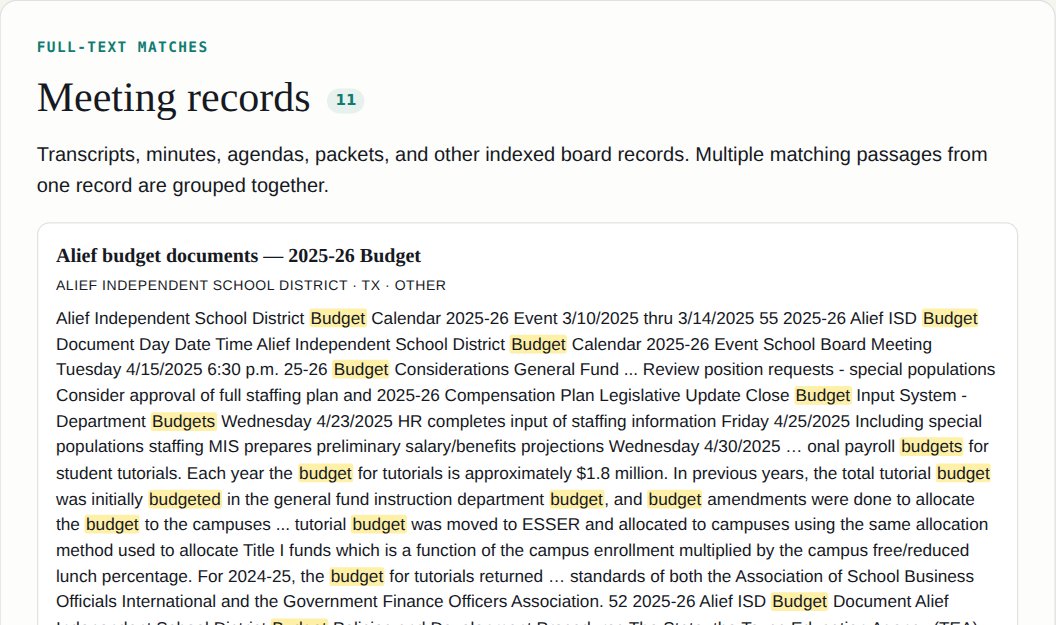
Search indexed minutes, agendas, packets, and transcripts for a proposed rule, budget item, or commitment your coalition wants to follow up on. Full-text search requires a research password; reach out for access.
Policy watch
Start with your coalition’s priority, from student phone rules to curriculum or school funding. Use topic patterns and public records to compare district approaches. The AI watch shown here is one example, separating discussion, proposals, and adoption.
Explore the data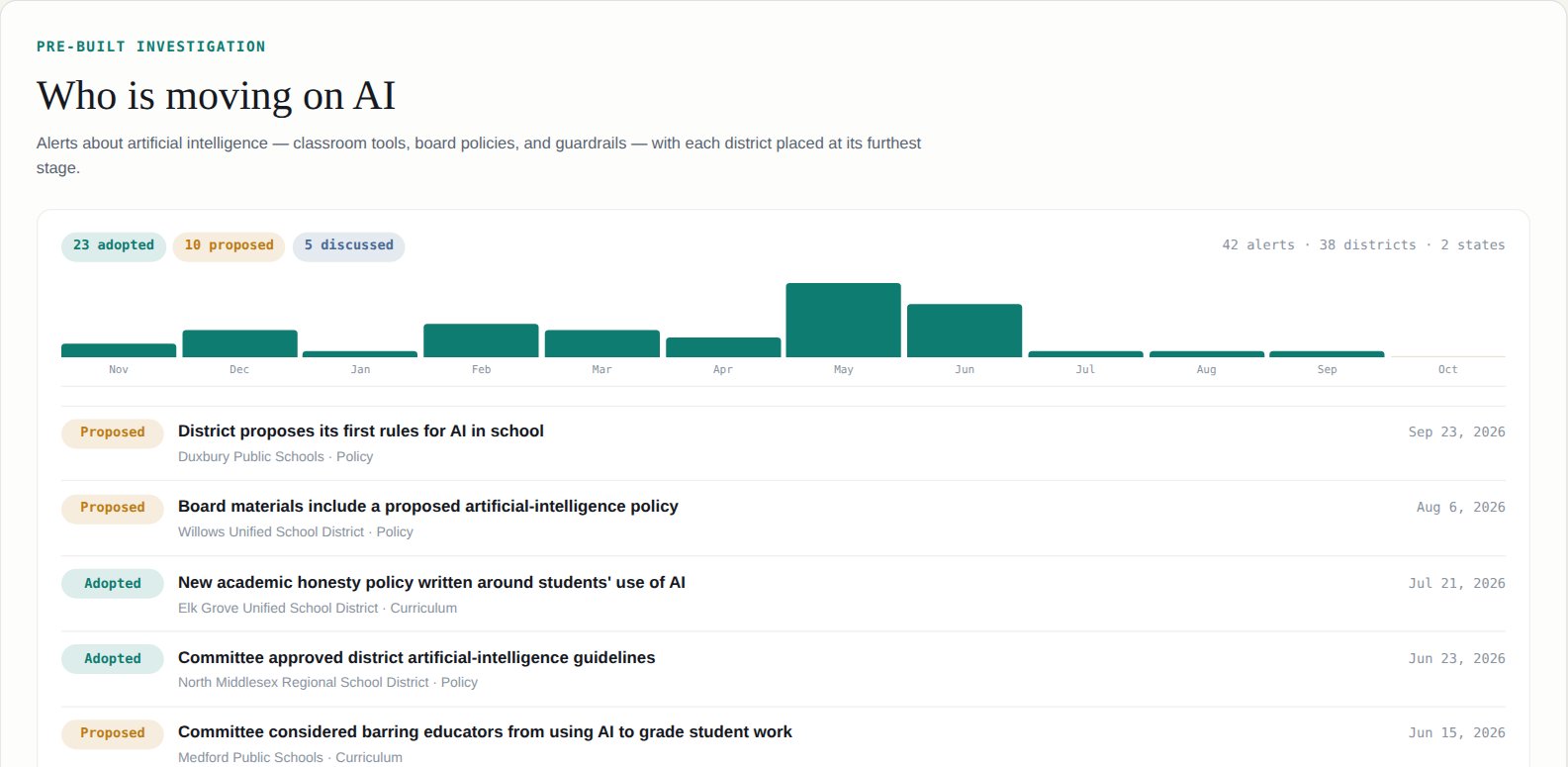
From research to public comment
Look for records tied to a concrete ask, such as more mental health support, a funding change, or stronger student participation.
Ground talking points and public testimony in the original agenda, minutes, or recording so members can cite the same evidence.
Find how another board approached your issue, then check the policy text and local context before proposing it in your district.
School board advocacy resources
Follow issues such as curriculum, student mental health, special education, student voice, school funding, and phone policies. Use published alerts to find relevant meetings and original records, then check the district’s current agenda for what is coming next. An alert is not a guarantee that an item remains on the agenda.
Read the source behind a decision before preparing testimony or meeting with officials. Distinguish a proposal from a final vote, identify unanswered questions, and link your community back to the evidence. Check the board’s official meeting notice and public comment rules for dates, sign-up steps, and time limits.
Help members understand the public decisions behind a funding campaign or policy ask. Meeting records may document board votes, and district pages include sourced election and ballot measure information where available. Confirm dates and deadlines with the official election office before planning outreach; coverage is incomplete.
Use state and topic patterns to identify districts discussing similar issues. Open the original documents before making comparisons or sharing a claim. Password-protected power mapping can help examine decisionmakers and documented positions; it separates source-backed findings from inference and gaps.
Parent organizations, student groups, education nonprofits, disability advocates, community coalitions, and other groups following public education can try the same data workspace as journalists. Continue to the access screen; no email verification is required. Reach out for access to password-protected tools.
Start exploring
Enter your email on the next screen and go straight to the workspace. No verification email or approval wait.
Get immediate accessKnow the coverage
Before circulating a member briefing, petition, or public comment, check the original record and the district’s current notice. Available records vary by district and date, and alert counts do not represent every meeting or vote.
Password-protected tools include additional search, research, and watch features. Reach out for access at [email protected].