
District overview
Berkeley Unified School District
Funding structure, how it compares to peers, and where major projects stand.
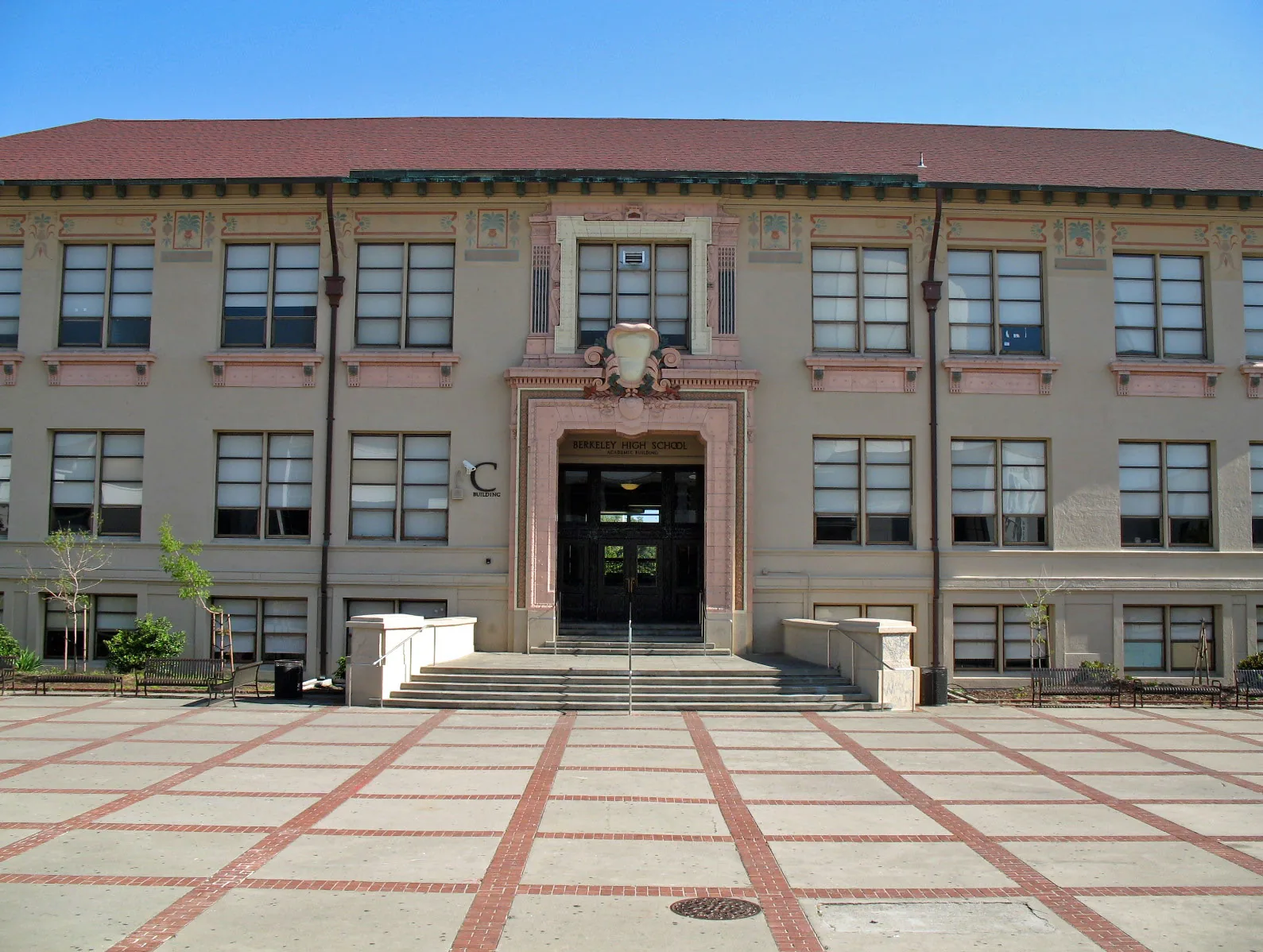
.JPG)
How do state funding and Berkeley's local measures fit together?
California's Local Control Funding Formula supplies base funding tied to attendance and additional money for high-needs students. Berkeley voters also support operating programs through BSEP and BERRA and facilities through bond measures including Measure G. The elected Board of Education adopts district budgets, policies, labor agreements, and capital plans; School Site Councils approve each school's achievement plan and decide the use of BSEP money allocated to that site.
State formula funding follows students and need
LCFF combines attendance-based base grants with supplemental and concentration funding generated by foster youth, English learners, and low-income students.
Local taxes fund defined programs
BSEP's annual plan allocates voter-approved parcel-tax revenue among class-size, instructional, music, library, technology, and school-site purposes; BERRA supports educator recruitment and retention.
The board and site councils have different authority
The board approves the districtwide budget and annual BSEP plan. Each School Site Council approves its school plan and decides its site's BSEP allocation within the measure rules.
Facilities use a separate capital structure
Measure G bond proceeds, state modernization funds, developer fees, and other capital funds support projects such as Longfellow, Sylvia Mendez, and Berkeley High theater work; those dollars are not interchangeable with ordinary classroom operations.
Berkeley's local measures add resources and flexibility, but each measure has legal purposes and oversight requirements. A large facilities balance cannot automatically solve a General Fund operating shortfall.
Where the district stands
Context from the official 2025–26 LCAP Budget Overview; it covers districtwide planned expenditures and is not a FY27 adopted-budget amount.
Context amount generated by foster youth, English-learner, and low-income enrollment in the official LCAP.
Context from the California Department of Education district directory.
Context calculation: $230,308,723 planned expenditures divided by 9,398 students; this is not an audited actual or a school-site allocation.
Major projects
2026–27 budget implementation
Annual budget reached the board in JuneThe board's 2026 cycle moved from budget workshops and balancing proposals to the annual budget and estimated actuals. The next public checkpoints should test revenue, enrollment, staffing, and reserve assumptions against actual FY27 conditions.
- Board budget workshop
- Budget-balancing solutions placed before the board
- 2026–27 budget and estimated actuals placed on the board agenda
- 2026–27 fiscal year began
Funding
General Fund, including LCFF and restricted state/federal revenue, plus legally separate BSEP/BERRA local-measure programs
The district-hosted agenda identifies the budget action but does not state the adopted total; the detailed meeting-platform attachment is not used under the recorded terms limitation.
BUSD educator workforce housing
Leasing underway; completion scheduled for January 2027A six-story development on district land at 1701 San Pablo Avenue will provide 110 affordable and middle-income apartments, with preference for Berkeley Unified employees, to support recruitment and retention.
- District and partners held the construction groundbreaking
- Waiting-list application period opened
- Published waitlist application deadline
- Developer's listed completion date
Funding
City of Berkeley Measure O affordable-housing bond, tax-credit and housing-finance partners, and project financing on district-owned land
The district announcement does not state a single all-in development cost; City records identify Measure O as a principal source.
Measure G modernization program
Major school and theater projects remain activeThe capital program includes the Berkeley High Little Theater and capacity work, Longfellow reconstruction, Sylvia Mendez modernization, and other districtwide safety and modernization projects.
- Measure G program update showed a $433.0 million updated expenditure budget
- Berkeley High theater construction pricing returned to the board
- Longfellow architect contract modification returned to the board
Funding
Measure G general-obligation bonds, supplemented for selected projects by state modernization funds, developer fees, interest, and other capital funds
November 2025 updated Measure G expenditure budget; individual projects also identify non-bond supplements.
Recent news
This overview uses Berkeley Unified's official LCAP, BSEP and facilities materials, district Board of Education agendas, and official City of Berkeley workforce-housing records. Where a current adopted-budget attachment is not available under the meeting-platform terms, the page labels the latest usable amount and its fiscal year rather than treating an agenda title as a dollar figure.
Get alerts for Berkeley Unified School District
We read every agenda, packet, recording, and set of minutes, and write up the decisions that affect families — each one linked to the document it came from.
View alerts for this district