We bring transparency to school decisions nationwide by tracking school board meetings, district documents, and public data. We use AI tools, rigorously evaluated for accuracy, to search for risks.
The policy desk
What’s moving in phones
The debate over phones, screens and the school day.
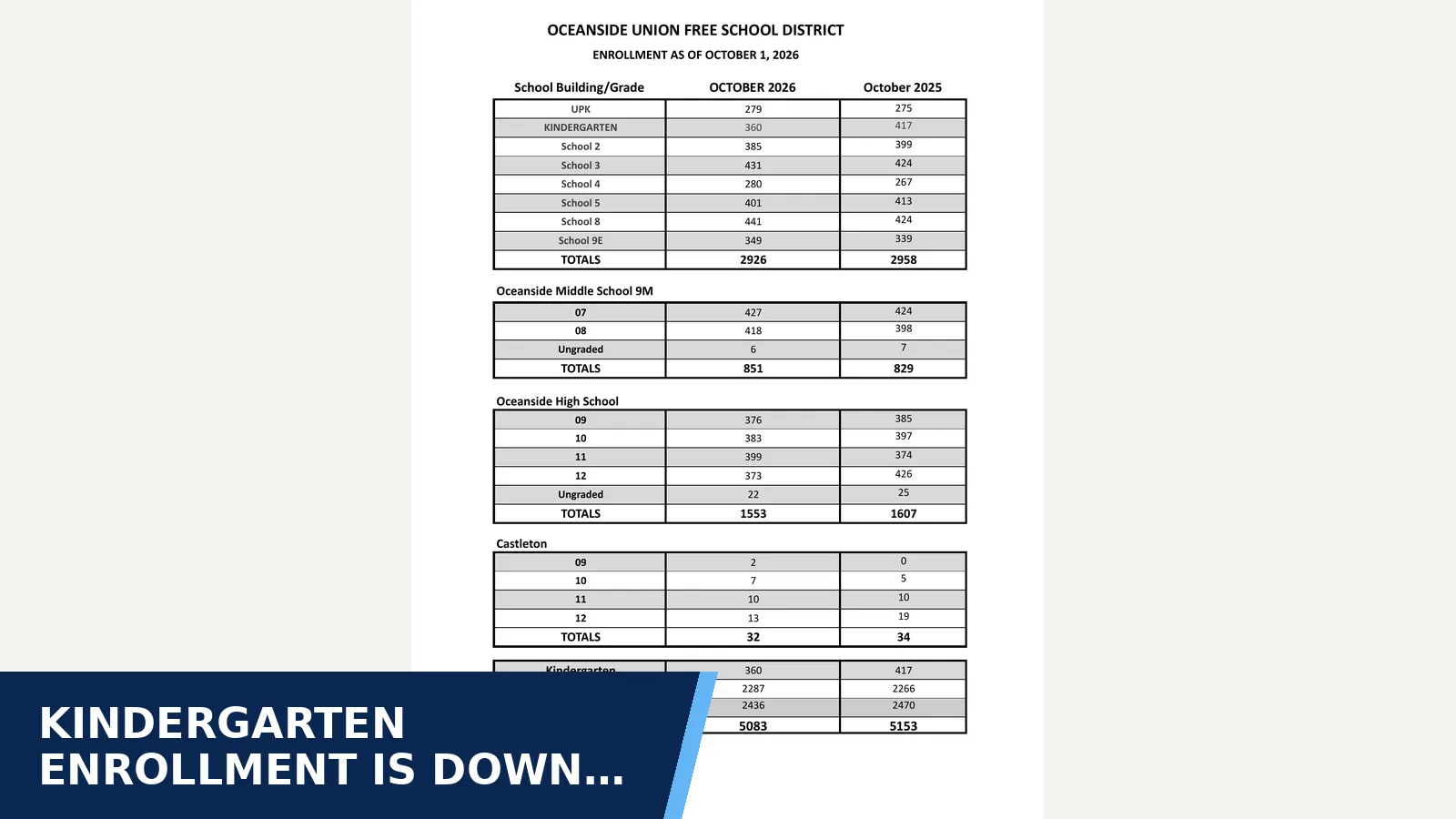
On Oct. 1, 2026 the district counted 360 kindergartners, down from 417 a year earlier. Students in grades K-12 totaled 5,083, down from 5,153. Elementary buildings (with pre-K) hold 2,926 students, down from 2,958.
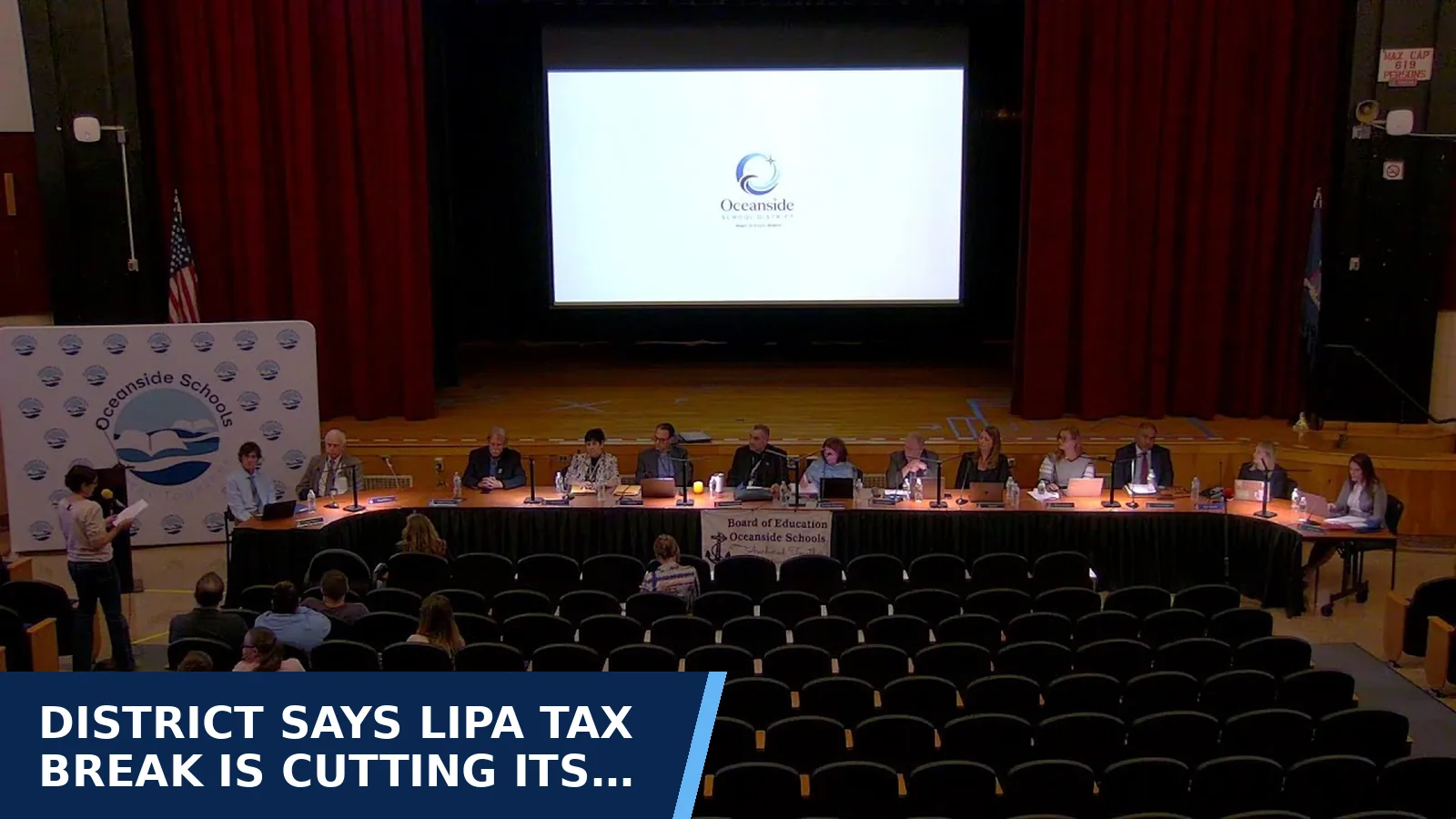
At the Oct. 14 meeting the external auditor noted the district's unassigned fund balance is 4.02% of next year's budget, just over the 4% state limit. District finance leaders said that is on purpose. They said the LIPA "glide path" tax deal cuts what the utility pays by about 45% over seven years, and could cost up to about $32 million in total.
On Oct. 14 the Board Building Committee reported the high school track resurfacing is done and the new auto and wood shop is nearly ready. It listed possible next projects: brick repairs at Schools #5 and #6, a new public address system, new playgrounds, a middle school track with possible turf field, and high school auditorium lighting. The budget cap is about $15 million.
New Policy 8636 on artificial intelligence had its first reading on September 30, 2026 and was on the October 14 agenda for second and final reading, with a motion and a second recorded. The recording's captions do not clearly show the vote count.
Enrollment was 5,398 on the 2026 count day, down 94 from 5,492. The district projects 5,161 by 2028-29. A committee reviewed possible closures; in March 2026 it advised that no elementary school close now. It is meeting again, and the board is seeking offers to sell the old Nichols Road administration building.
On October 14, 2026 the board gave a first reading to policy 8113, titled extreme heat condition days. The policy committee planned to meet again the following Monday.
At the October 14, 2026 meeting the district's technology leader said elementary iPads now go home only Monday to Thursday, and not over weekends or school breaks. Devices begin going home in grade 3.
Edwards-Knox scheduled an appointment for an elementary school principal at its October 14 special meeting. The partial agenda does not identify the appointee or establish whether the board approved the appointment.
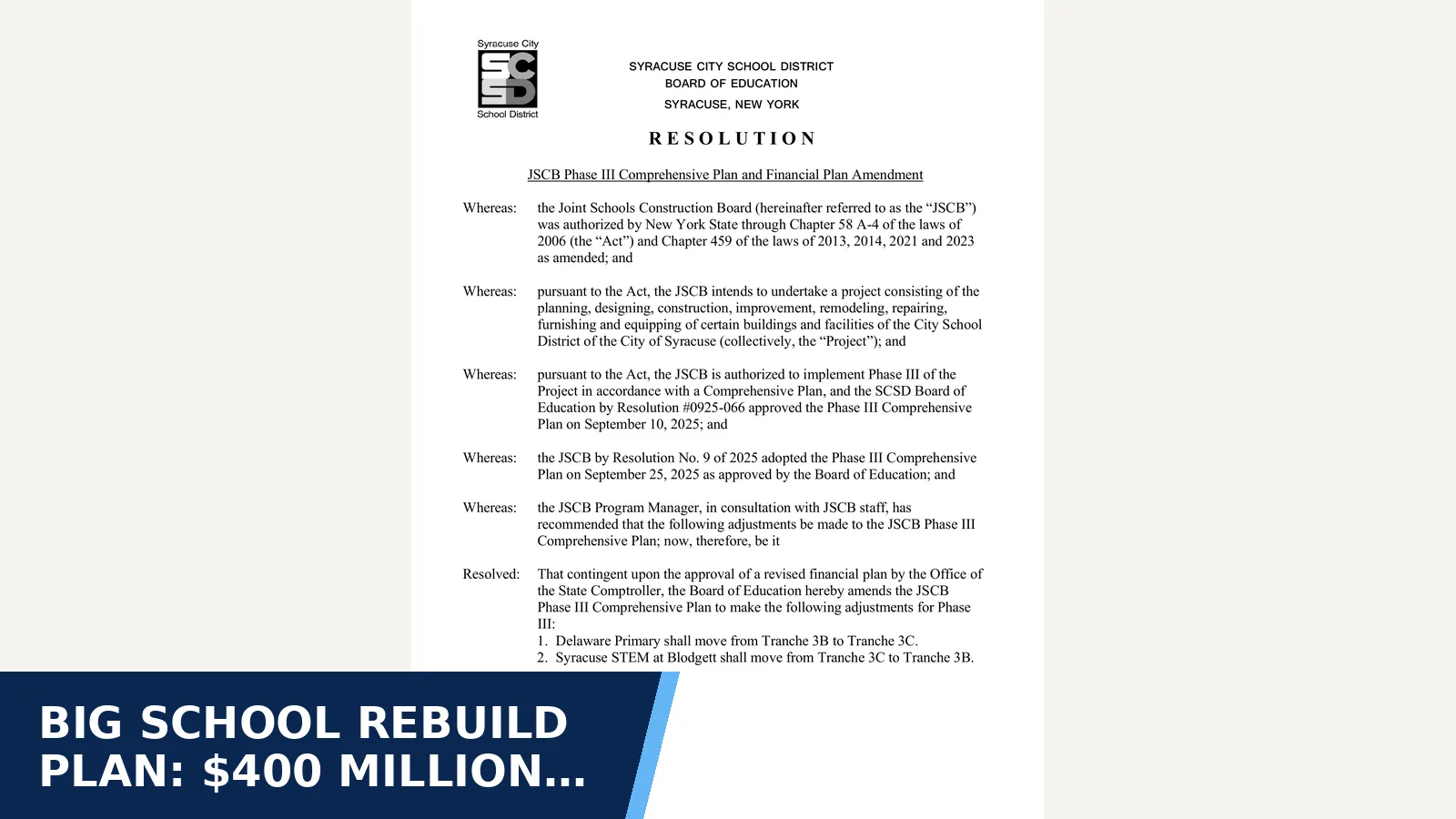
The state allowed $400 million to renovate ten Syracuse school buildings (Phase III). The state approved the plan on Jan 30, 2026. Designs are underway for Nottingham HS, Webster ES and Seymour Dual Language Academy. On Oct 14, 2026 the board was asked to move Syracuse STEM at Blodgett earlier and Delaware Primary later.
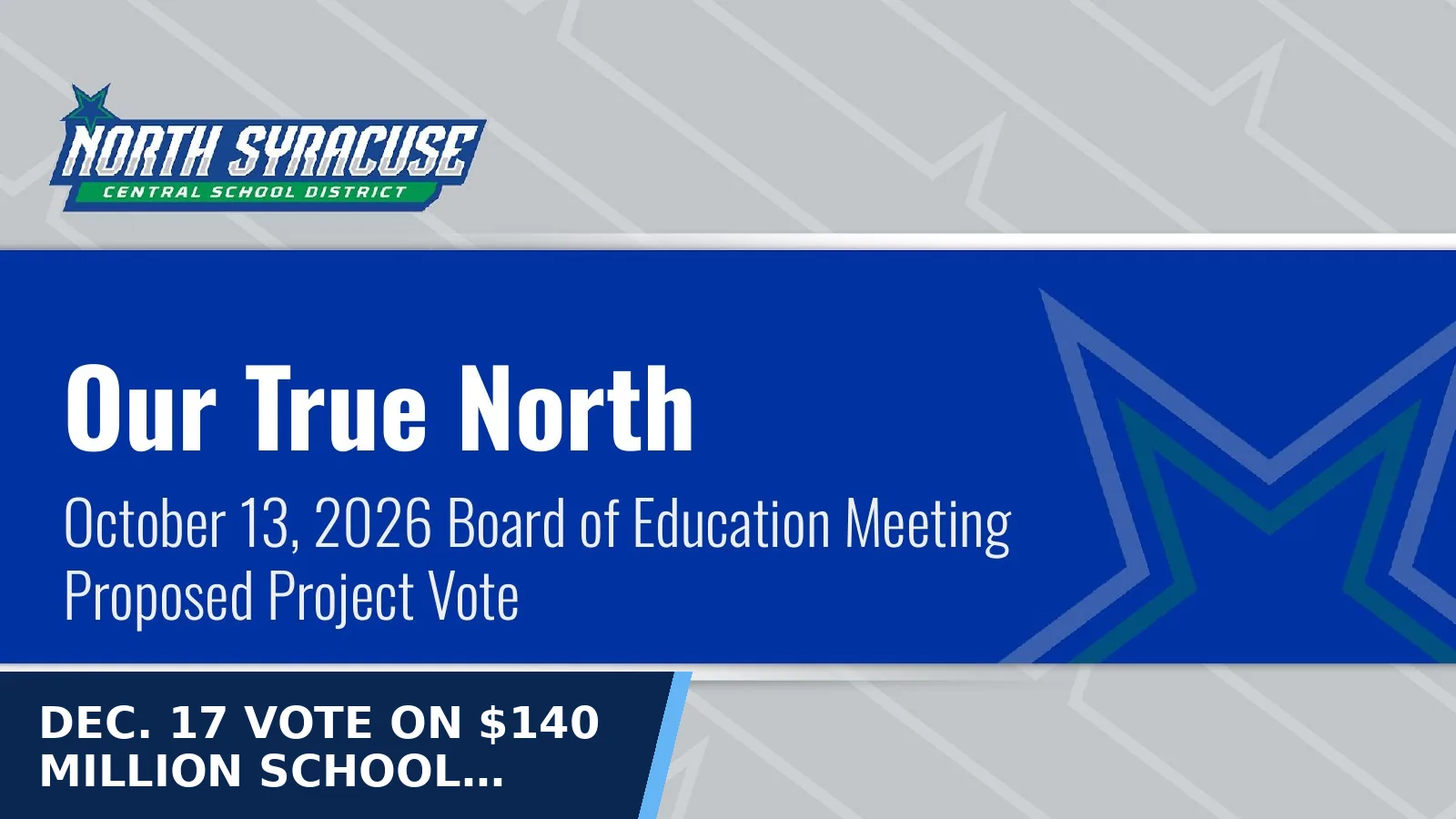
The district plans a public vote on December 17, 2026 for a building project of up to $140.3 million at every school. It pays for new roofs, heating and cooling work, classroom updates, playgrounds, athletic fields and a new STEM and career hub at the high school. The district says the plan is paid over 15 years and raises school taxes about 1% a year, about $22.58 for a $200,000 home with the Basic STAR exemption.
Voters decide two propositions on Tuesday 13 October 2026, noon to 8 p.m. at the bus garage. Proposition 1, $22,750,000, builds a new bus garage on the high school campus and pays for a new elevator and boilers at the junior-senior high school and a roof recoating, new car park, new elevator and a secure main-entrance vestibule at Townsend Elementary. Proposition 2, $1,332,000, adds a paved drop-off loop at the front of Townsend and only passes if Proposition 1 does. State building aid would cover $18,111,275 of Proposition 1, with $1,780,700 from the district's capital reserve, $552,072 from the Catskill Watershed Corporation and an $805,000 FEMA flood-buyout offer for the old garage, leaving a local share of $1,500,953 - about $6.38 a year per $100,000 of a home's market value.
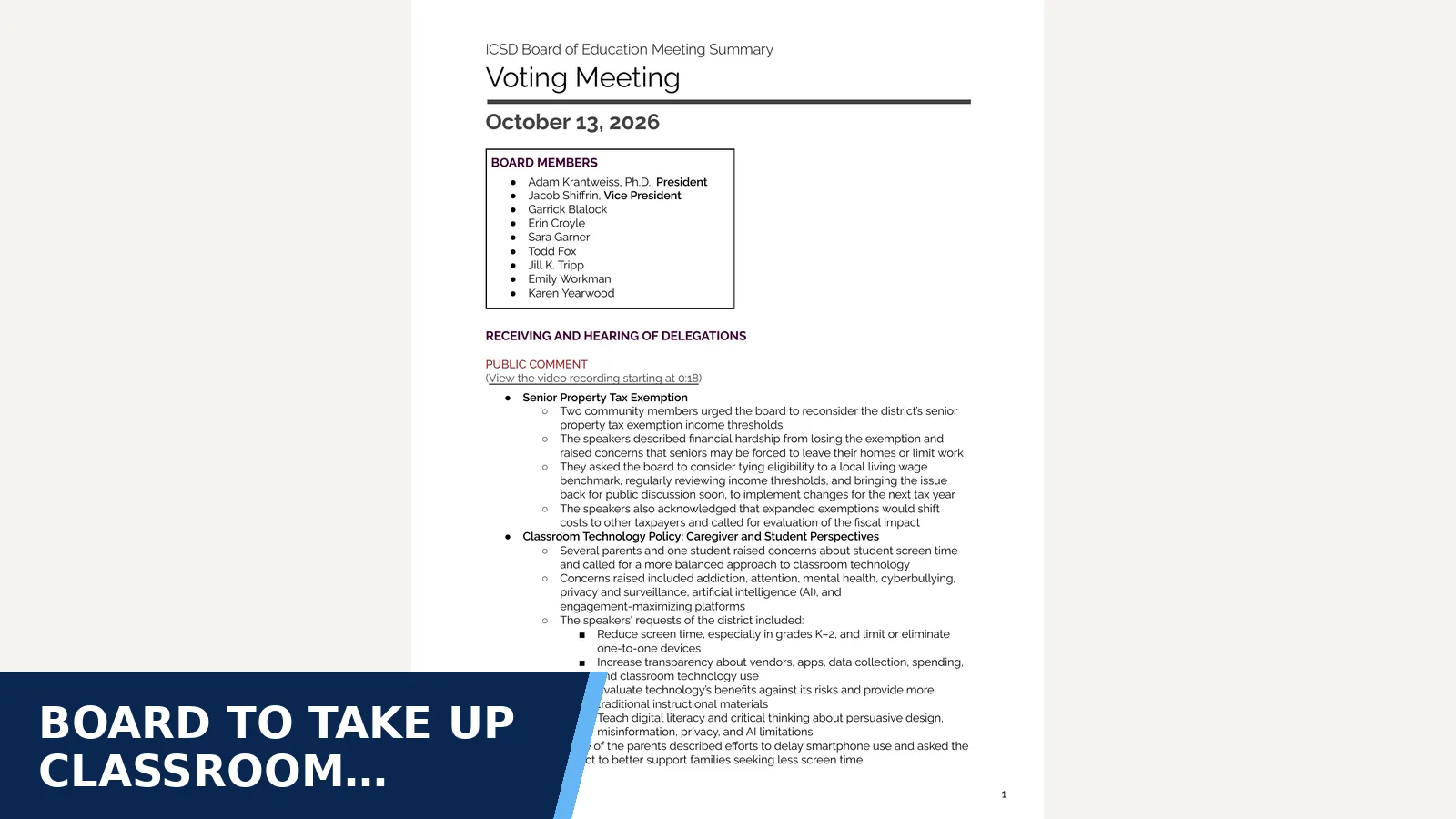
At the Oct 13, 2026 meeting, parents, a student and teachers asked for less screen time and more limits on classroom devices, including in grades K-2. Administrators said the district has no set screen-time limits and does not give students generative AI tools, though some approved apps have AI features. Board members said the topic will go to a policy meeting.
On Oct 13, 2026 Superintendent Luvelle Brown said the district plans to lengthen the school day starting in 2027-28 under the new teacher contract: 30 more minutes in elementary schools and 15 more in secondary schools. He plans to bring a recommended schedule to the board in February, with community meetings and a survey this fall. On the recording he said a first community meeting was tentatively set for Oct 22 and another for Nov 10, with a community survey hoped for in November or December.
At the October 13, 2026 board meeting, staff said Webster has an AI toolkit and staff guidelines, finished an hour-long AI training in all 11 buildings, and is looking at draft regulations. The only AI rule found for students is that unapproved AI use counts as cheating in the Code of Conduct.
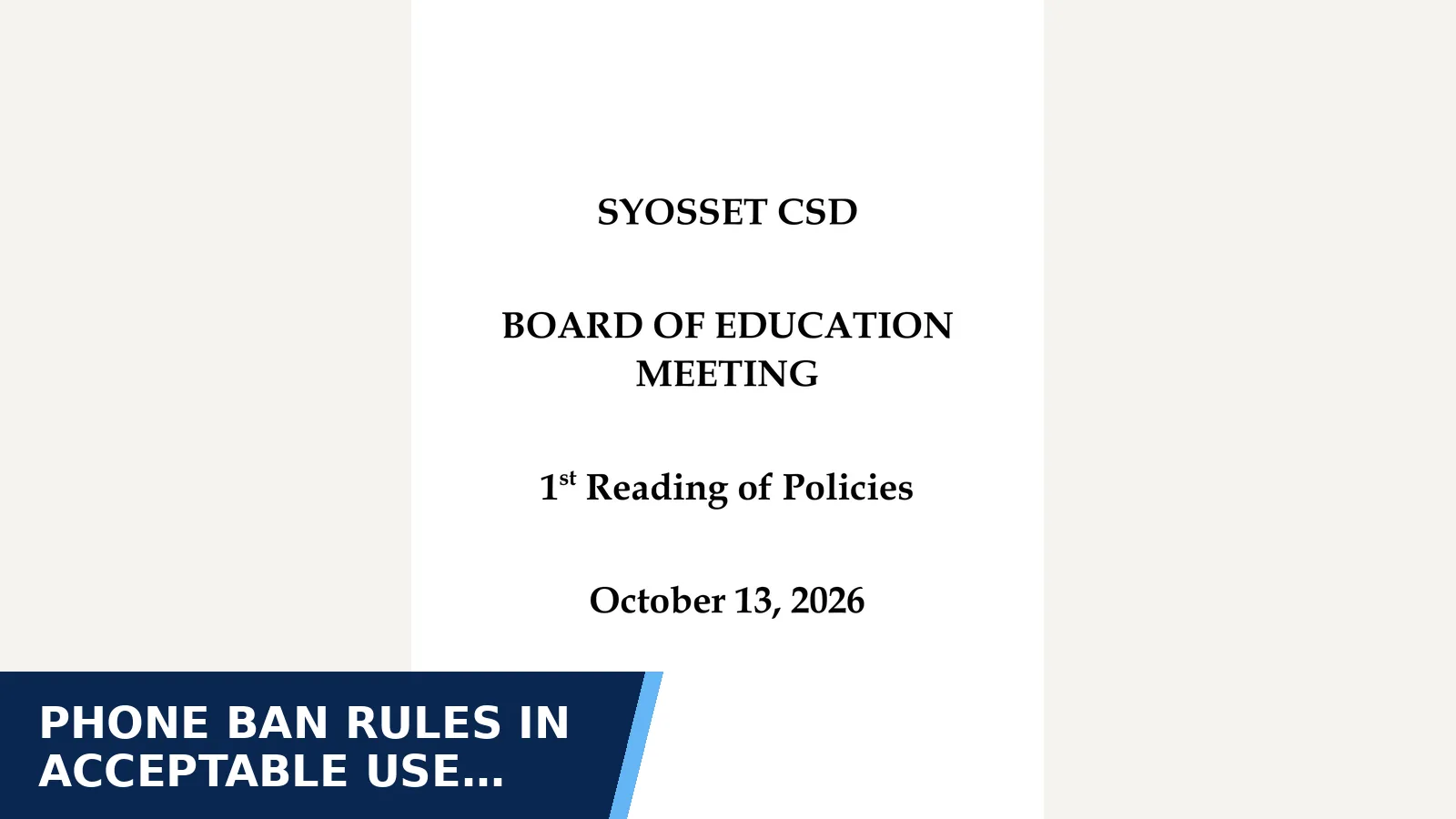
Students may not use phones, smartwatches or tablets anywhere at school all day, including lunch and passing time. The board had a first reading Oct. 13, 2026 of a revised Acceptable Use Policy 4526 and Internet Safety Policy 4526.1, with a vote planned Nov. 16. Draft additions include a rule that no tool that handles student personal data can be used until a privacy contract is signed, and a ban on VPNs that get around school filters.
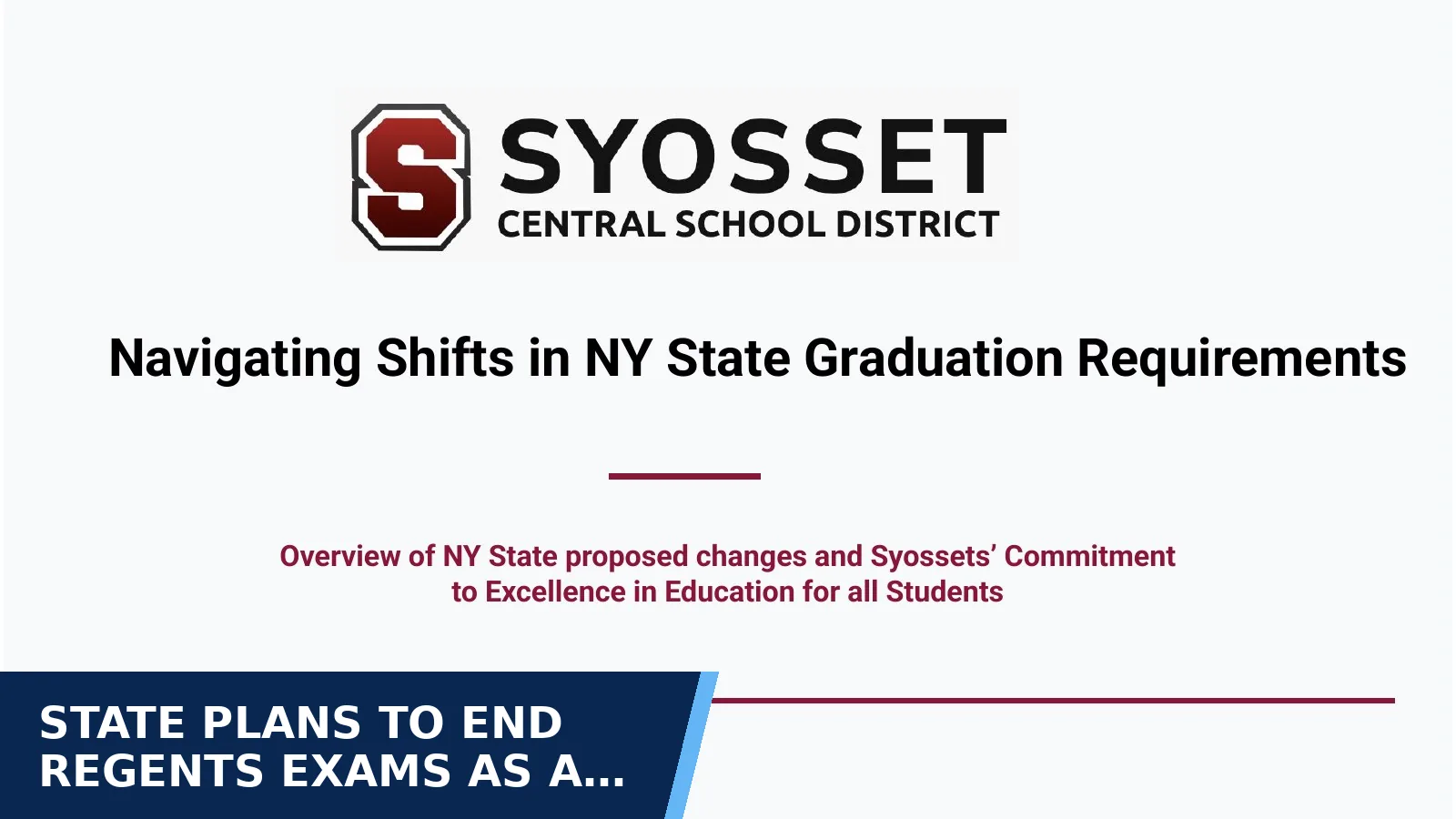
On Oct. 13, 2026 the district presented New York State's proposed graduation changes ("NY Inspires"): Regents exams would no longer be required to graduate starting in 2027-28, there would be one diploma statewide (January 2028), and credits would be based on showing skills instead of seat time. Personal finance becomes required in 2026-27.
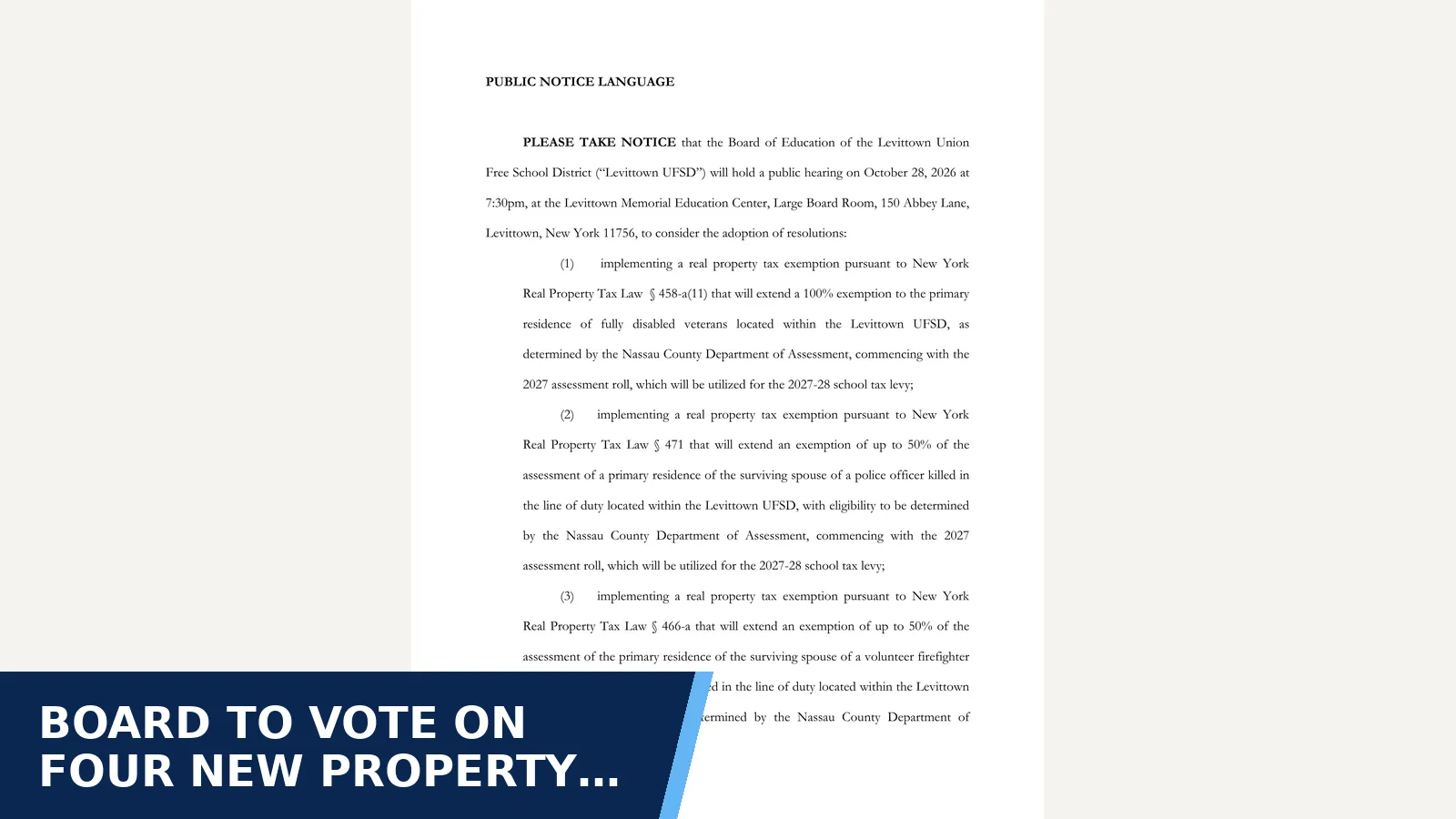
On October 13, 2026 the board heard how it could adopt a new state option that fully exempts the home of a veteran with a permanent, total service-connected disability from school tax. The board has not voted. A resolution would be needed before March 1, 2027.
At the October 13, 2026 meeting the superintendent read a statement about a recent Suffolk County Police investigation of an alleged child endangerment incident and the district's delayed communication with the community. The brief says a letter to the school community would follow.
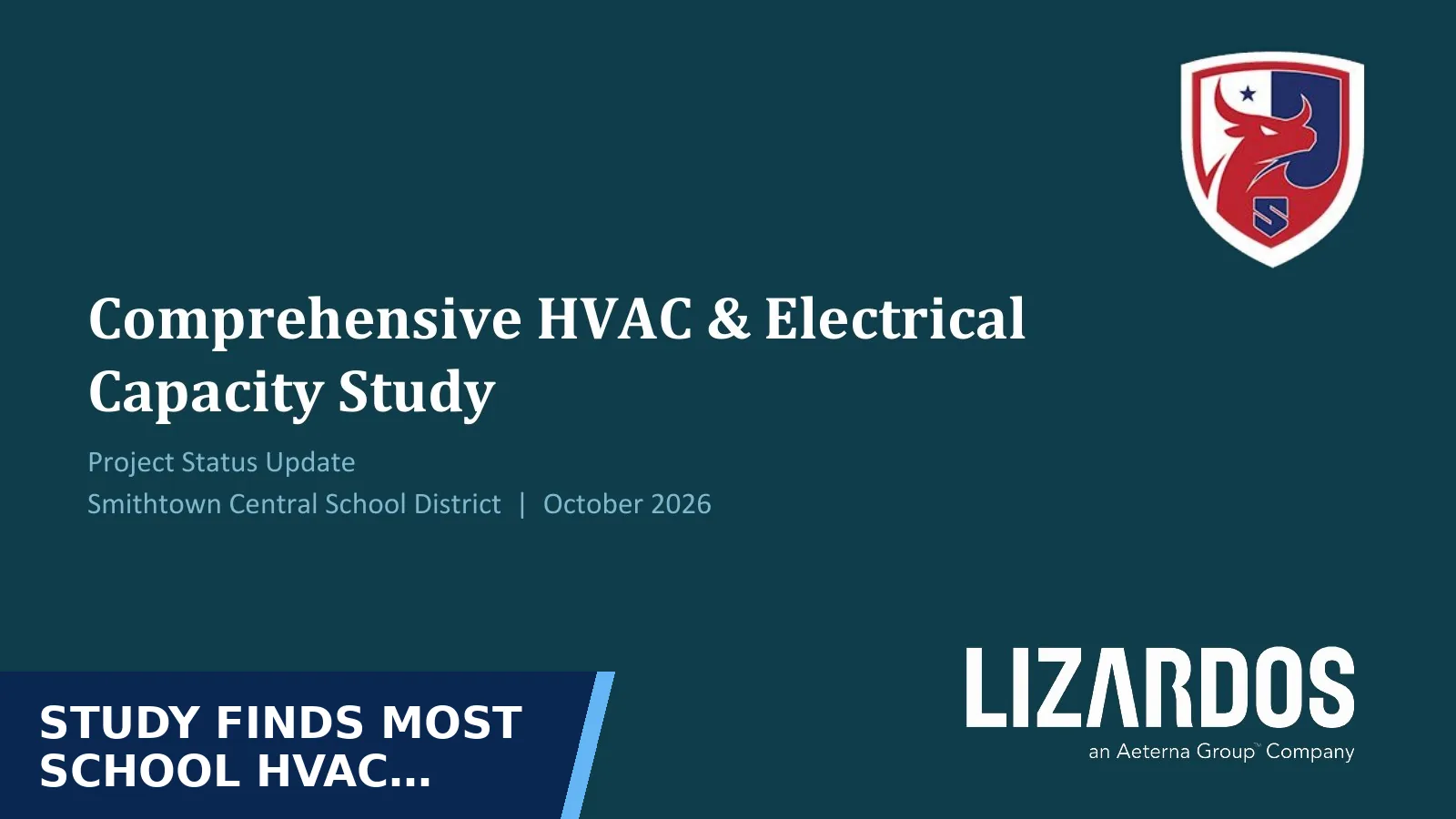
Engineers checked heating, cooling and electrical gear in all 14 district buildings. Of 400 items checked so far in 12 school buildings, 59% are in fair or poor condition. 25 of 28 boilers are rated fair. Five of seven elementary schools mostly use window air-conditioning units. Electrical panels will need upgrades before new cooling can be added.
On Oct. 13, 2026 the superintendent said the district will build AI best practices and procedures. AI expert Dr. Tony Frontier will meet student and parent groups Dec. 1 and the board Dec. 2. Board members have asked what training and guardrails teachers and students will get.
The outside auditor told the board on Oct. 13, 2026 that the audit will get clean opinions but notes a material weakness in accounting records. About $53 million of adjusting entries were needed; two entries were 75% of that.
On October 8, 2026 a trustee asked the board to look at its generative AI policy (policy 8636). Others asked that the computer use and ed-tech policies be reviewed too. Discussion is planned for the next meeting. This follows parent comments about screen time and school devices and a February 2026 technology report.