LCPS considers elementary boundary changes in Eastern Loudoun
LCPS is considering changing elementary attendance boundaries in Eastern Loudoun, but the board made no decision at its Oct. 22 work session.
Read the full storyLCPS is considering changing elementary attendance boundaries in Eastern Loudoun, but the board made no decision at its Oct. 22 work session.
Read the full storyWe bring transparency to school decisions nationwide by tracking school board meetings, district documents, and public data. We use AI tools, rigorously evaluated for accuracy, to search for risks.

The policy desk
The debate over phones, screens and the school day.

The policy desk
How artificial intelligence is changing classrooms and school rules.

The policy desk
Students speaking up, organizing and helping shape their schools.
The news desk
Central Islip Union Free School District
The district AI policy for faculty and staff approves only Microsoft Copilot, Google Gemini and DIFFT. Tools such as ChatGPT, Claude, Grammarly and Grok are not allowed for district work. Staff may not enter student personal information into AI tools and must check all AI output.
Alexander Valley Union Elementary School District
Administrators are asking the board to approve an income-based sliding fee scale for aftercare, expanding reduced-fee access for families who do not qualify for ELOP-funded free care. The proposed rates are $4 per day in the 50% fee category, $6 in the 75% category, and $8 at the full fee; the recommendation would take effect November 1 if approved.
Schenectady City School District
The superintendent said acts of vandalism at bus vendor Durham School Services hit about 50 routes and 1,800 students during the week of October 12. Other vendors took over routes while Durham rebuilt its fleet.
South Brunswick School District
The district is exploring a proposal to allow some current school security officers to carry firearms; the board has not adopted it. The committee requested cost estimates for insurance, salaries, training and body armor, and leaders said any armed officers would be retired police who meet training and recertification requirements.
An Oct. 15 agenda item asks the board to consider reserving spring graduation ceremonies for students who have met all graduation requirements; students completing credits in summer would be recognized at a summer ceremony. The item is still under consideration, and the agenda says feedback will inform a later recommendation and formal action.
Riverhead Central School District
New Policy 8636 on artificial intelligence had its first reading on September 30, 2026 and was on the October 14 agenda for second and final reading, with a motion and a second recorded. The recording's captions do not clearly show the vote count.
Monroe-Woodbury Central School District
On October 14, 2026 the board gave a first reading to policy 8113, titled extreme heat condition days. The policy committee planned to meet again the following Monday.
Great Neck Union Free School District
At the October 14, 2026 meeting the district's technology leader said elementary iPads now go home only Monday to Thursday, and not over weekends or school breaks. Devices begin going home in grade 3.
Montclair Public School District
The Board adopted districtwide rules prohibiting students in pre-K through grade 8 from using generative AI in assignments or other work products. For grades 9–12, AI use is limited to teacher-authorized assignments and must follow citation or documentation requirements.
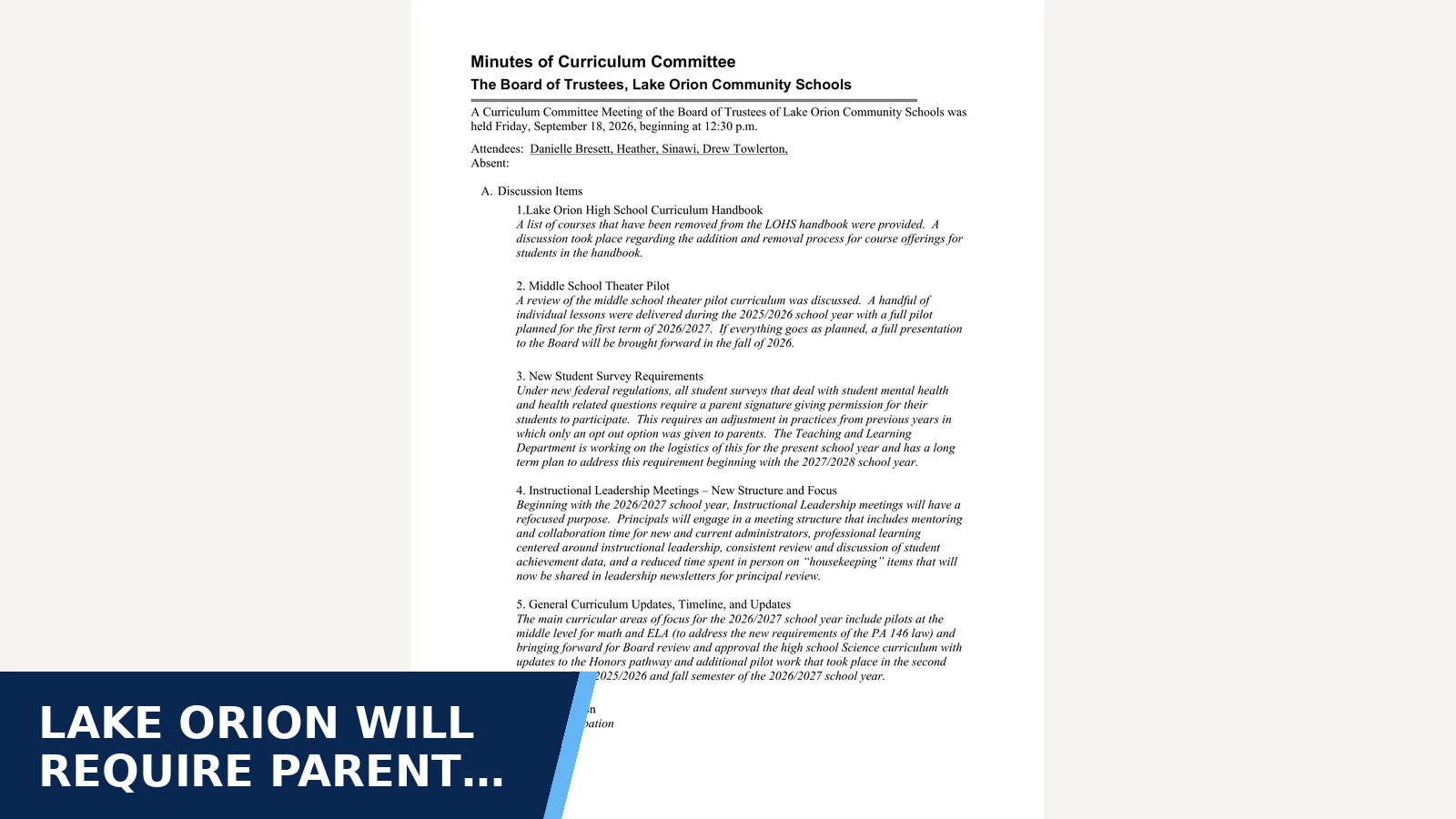
Lake Orion Community Schools is replacing its previous opt-out practice with a requirement for a parent signature before students take surveys about mental health or other health-related topics. The Teaching and Learning Department is working out implementation for this school year, with a longer-term plan beginning in 2027–28.
Students in grades 9–11 who live in areas affected by redistricting are being asked to choose between staying at their current high school and attending their newly assigned school for 2027–28. The district reported nearly 75% of forms completed by Oct. 12, with the form closing Oct. 16 and scheduling to begin in January.
San Francisco Unified School District
The Board voted 5–2 to develop a system that guarantees elementary students a neighborhood-school seat while preserving access to citywide programs. It would replace the current lottery for students entering in 2028–29. The detailed policy still needs a final vote, scheduled for April 2027.
The board revised Policy 8155 so qualifying special-permission and boundary-exception students may finish their current school. Moving to the next middle or high school still requires a new application and available capacity. Some social or emotional transfers require documented continued need.
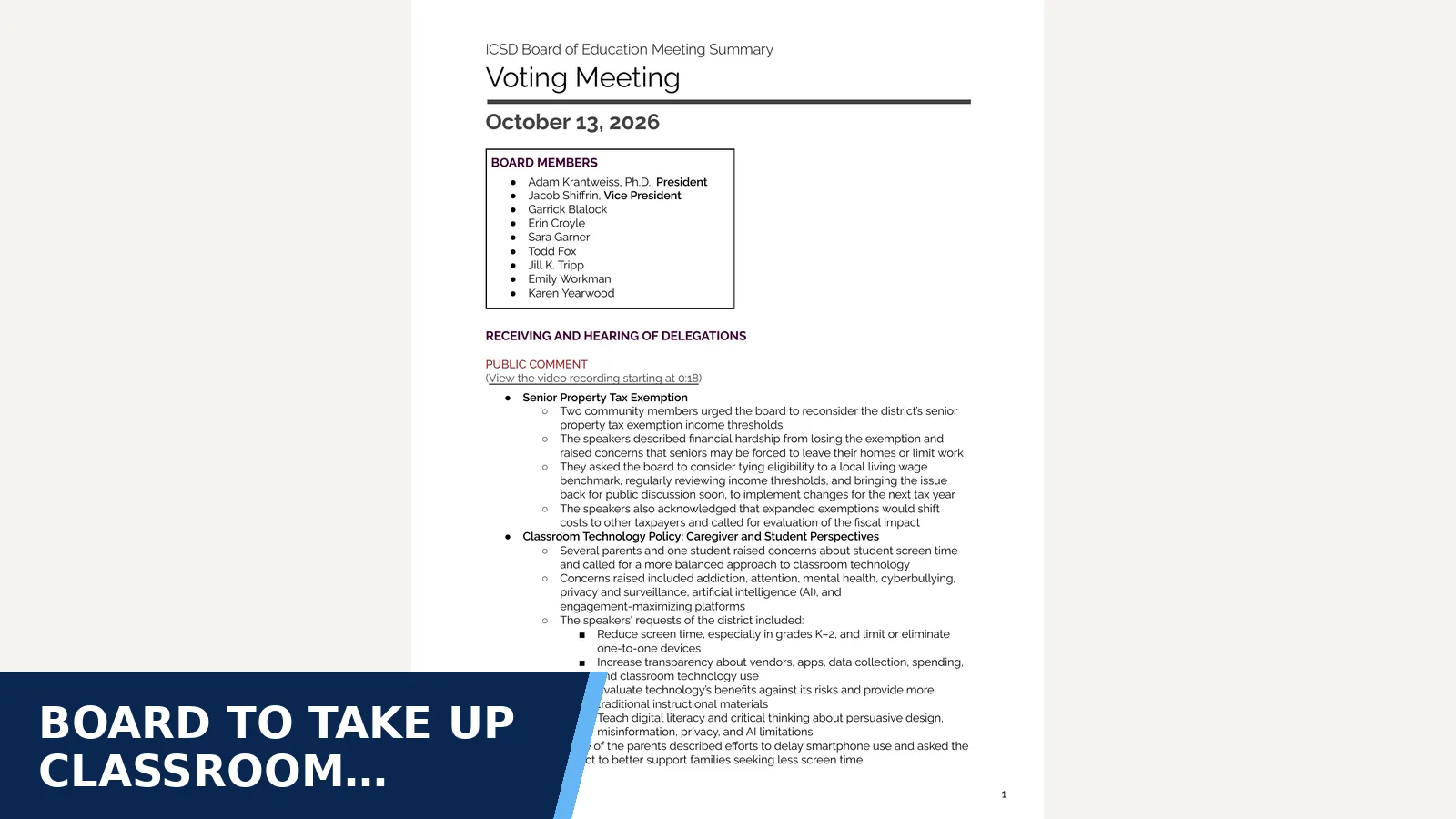
At the Oct 13, 2026 meeting, parents, a student and teachers asked for less screen time and more limits on classroom devices, including in grades K-2. Administrators said the district has no set screen-time limits and does not give students generative AI tools, though some approved apps have AI features. Board members said the topic will go to a policy meeting.
On Oct 13, 2026 Superintendent Luvelle Brown said the district plans to lengthen the school day starting in 2027-28 under the new teacher contract: 30 more minutes in elementary schools and 15 more in secondary schools. He plans to bring a recommended schedule to the board in February, with community meetings and a survey this fall. On the recording he said a first community meeting was tentatively set for Oct 22 and another for Nov 10, with a community survey hoped for in November or December.
Egg Harbor Township School District
The board approved a new high-school diploma policy that sets out requirements for state-endorsed diplomas and identifies additional ways students may earn a diploma. The policy was described as state-mandated; the meeting record does not specify the individual pathways.
Webster Central School District
At the October 13, 2026 board meeting, staff said Webster has an AI toolkit and staff guidelines, finished an hour-long AI training in all 11 buildings, and is looking at draft regulations. The only AI rule found for students is that unapproved AI use counts as cheating in the Code of Conduct.
Syosset Central School District
Students may not use phones, smartwatches or tablets anywhere at school all day, including lunch and passing time. The board had a first reading Oct. 13, 2026 of a revised Acceptable Use Policy 4526 and Internet Safety Policy 4526.1, with a vote planned Nov. 16. Draft additions include a rule that no tool that handles student personal data can be used until a privacy contract is signed, and a ban on VPNs that get around school filters.
The October 13 agenda proposed adopting CA-NDPA version 1.5 for use with all future vendors and partners that receive MJUSD student data. The district says the updated agreement is intended to meet state and federal privacy requirements and address emerging risks, including educational AI.
Westfield Public School District
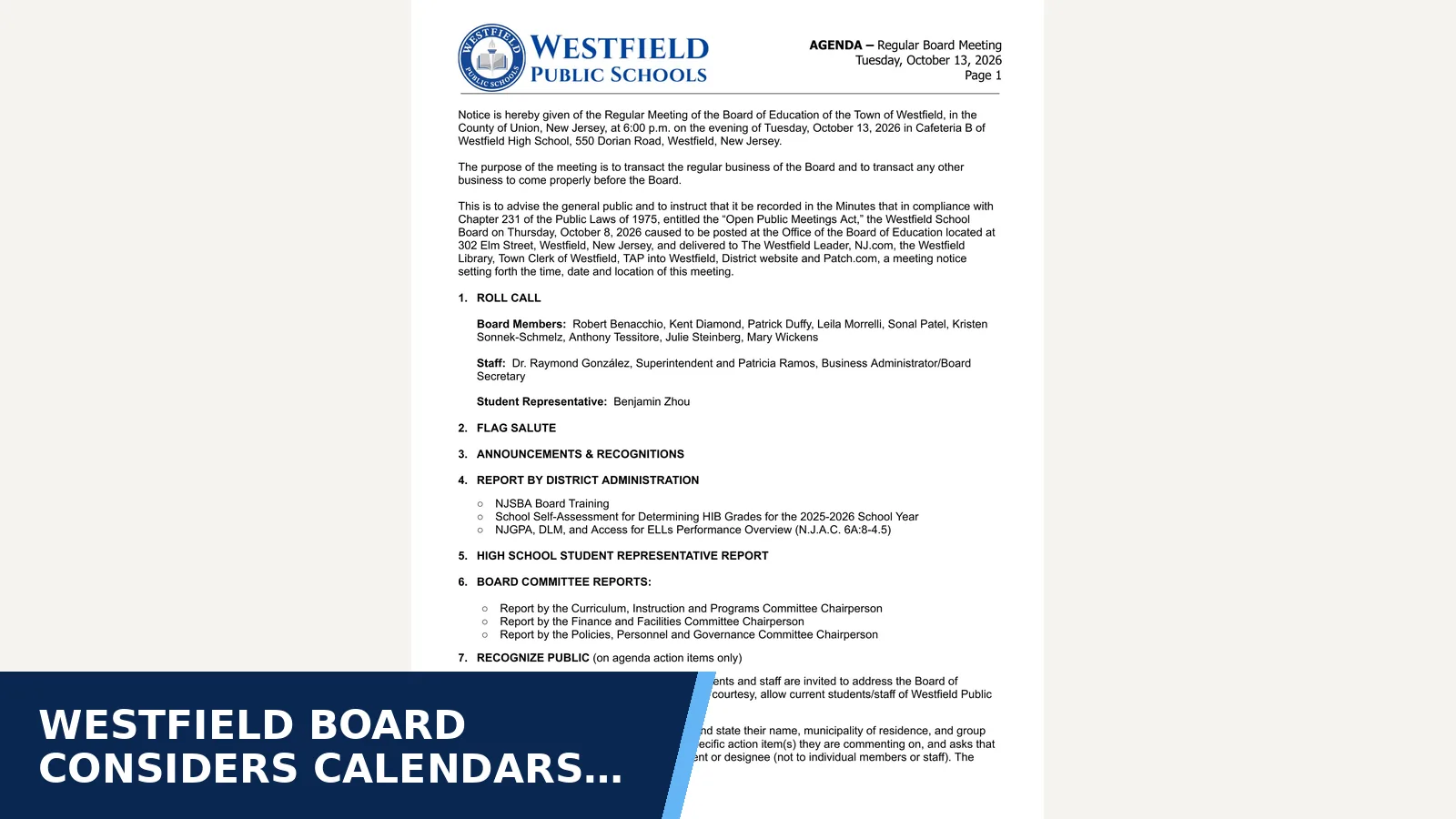
The board agenda proposes approving school calendars for 2027–28 and 2028–29; the records do not establish that the calendars were adopted. The 2027–28 calendar lists April 10, 11 and 12 as emergency make-up days, with unused days potentially converting to closures on June 16, June 15 and May 26, in that order.
Southfield Public School District
Southfield Public Schools is scheduled to have no students in class on Tuesday, November 3, 2026, for professional development. The agenda lists this as an Election Day schedule notice for the district.
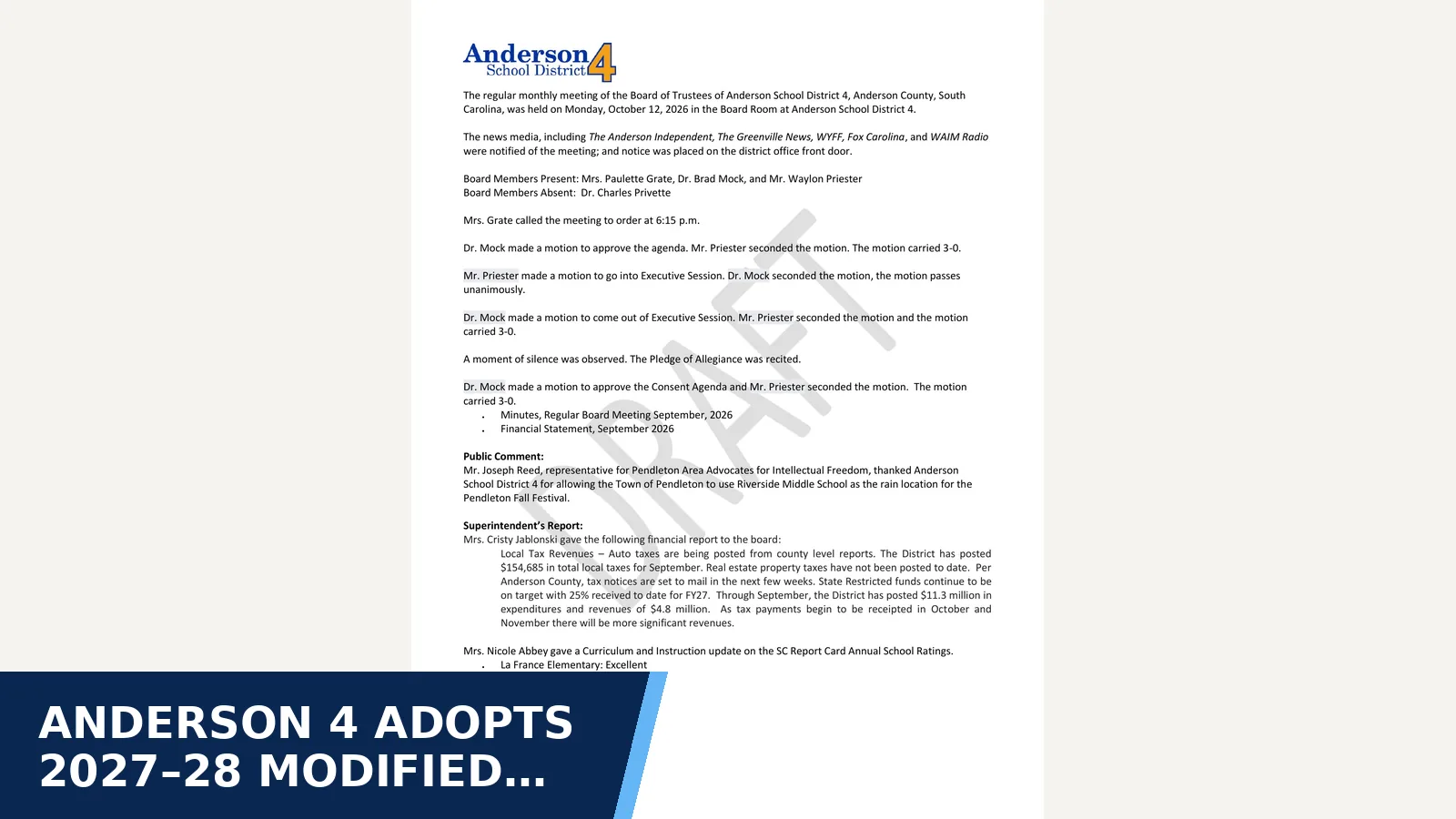
The board approved the 2027–28 modified school calendar on final reading, moving it from a proposal to the adopted district schedule. The minutes record a 3–0 vote but do not reproduce the calendar dates.
Garden City Public Schools, USD 457
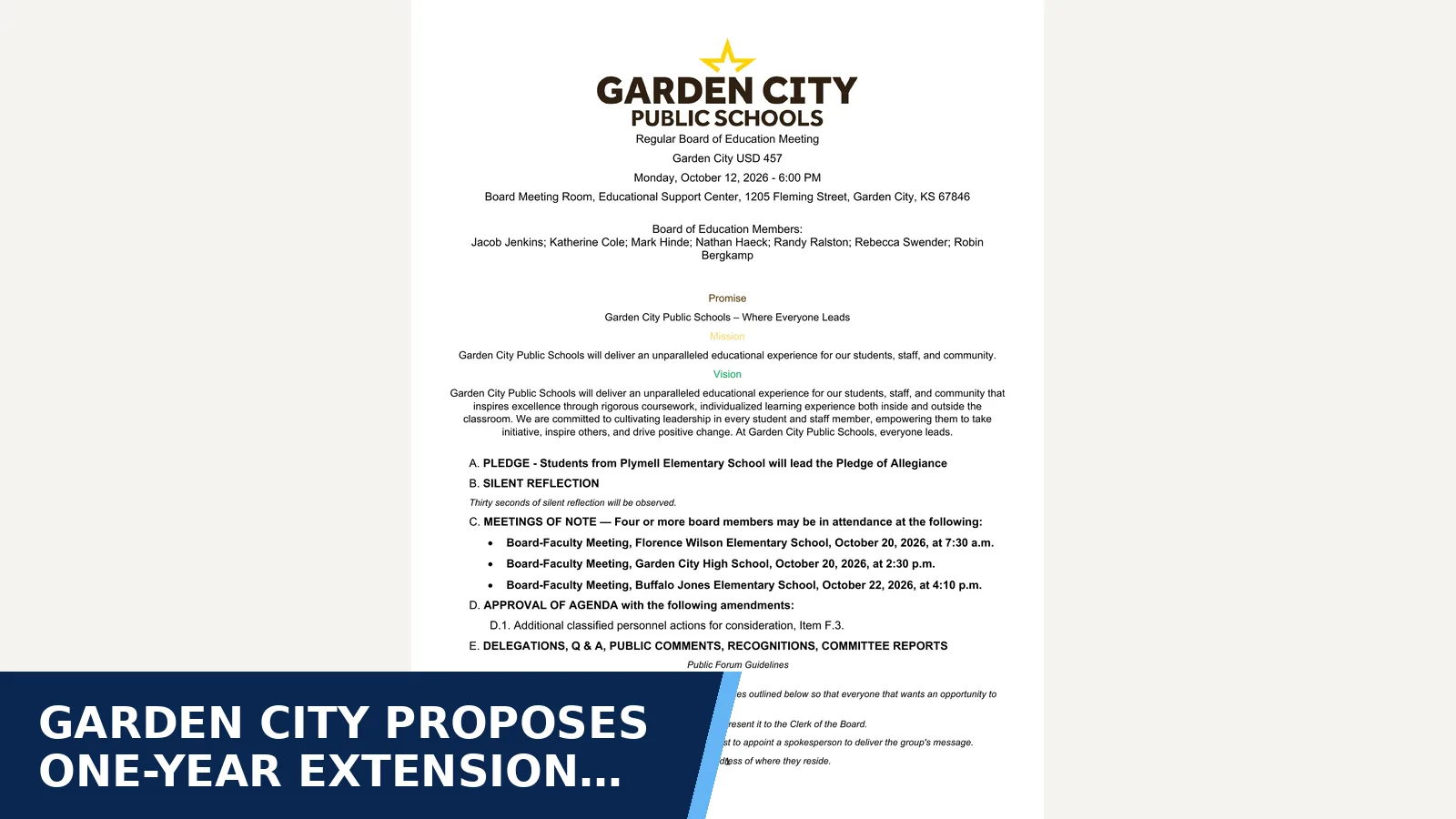
The district is proposing to let students with an approved in-district transfer for 2026–27 stay at that school for 2027–28 without reapplying. The one-year exception would require the student to remain in good standing, live in the district, and attend a school serving their grade; it would expire June 30, 2028.
Blue Valley Unified School District 229
The October 12 agenda proposes revising Policy IIA on awarding high-school credit for middle-school world-language coursework. The agenda says the clarification follows the adoption of updated KASB-aligned policies in July 2026; board approval is not established in this agenda.
The board is scheduled to take a final reading on a proposed 2027–28 district calendar at its Oct. 12 meeting. The shared modified calendar lists 90 instructional days in each semester, 180 total.
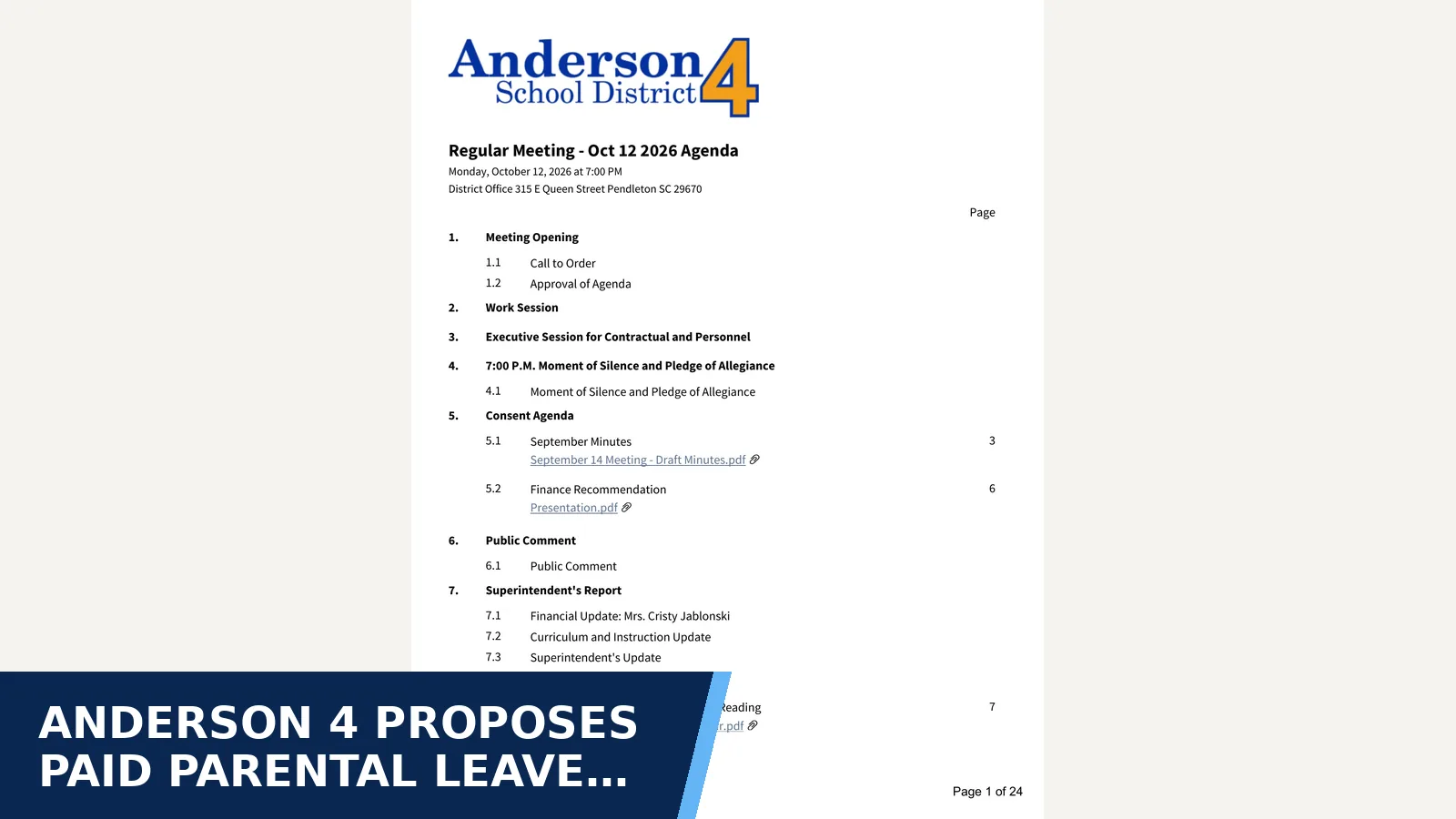
The board will consider a first reading of revised paid parental leave rules. The draft provides eligible leave-earning employees six weeks at full base pay for birth parents and primary adoptive caregivers, and four weeks for other parents and foster placements, with no service requirement.
Saratoga Springs City School District
On October 8, 2026 a trustee asked the board to look at its generative AI policy (policy 8636). Others asked that the computer use and ed-tech policies be reviewed too. Discussion is planned for the next meeting. This follows parent comments about screen time and school devices and a February 2026 technology report.
Massapequa Union Free School District
The board is contracting with the Long Island Coalition Against Bullying (September 25, 2026 to June 30, 2027). On October 8 the group presented plans for a districtwide anti-bullying task force, climate and culture surveys, student listening sessions, staff training and parent nights. The district reported 29 bullying (DASA) reports in 2025-26, with 15 found true.
Enlarged City School District of Middletown
On October 8, 2026 the board waived a second reading and adopted Policy 3421 on Title IX sex discrimination and harassment. It was first read on September 24.
Pleasanton Unified School District
The board adopted Policy 441, a new districtwide policy guiding artificial-intelligence use, without modifications. Staff said more detailed administrative rules will follow, including guidance shaped by the district’s AI focus group.
The board passed Regulation 4393, covering accelerated pathways for educator and school-psychology candidates to complete student-teaching and internship requirements for licensure. The regulation addresses both educator and school-psychology candidate pathways.
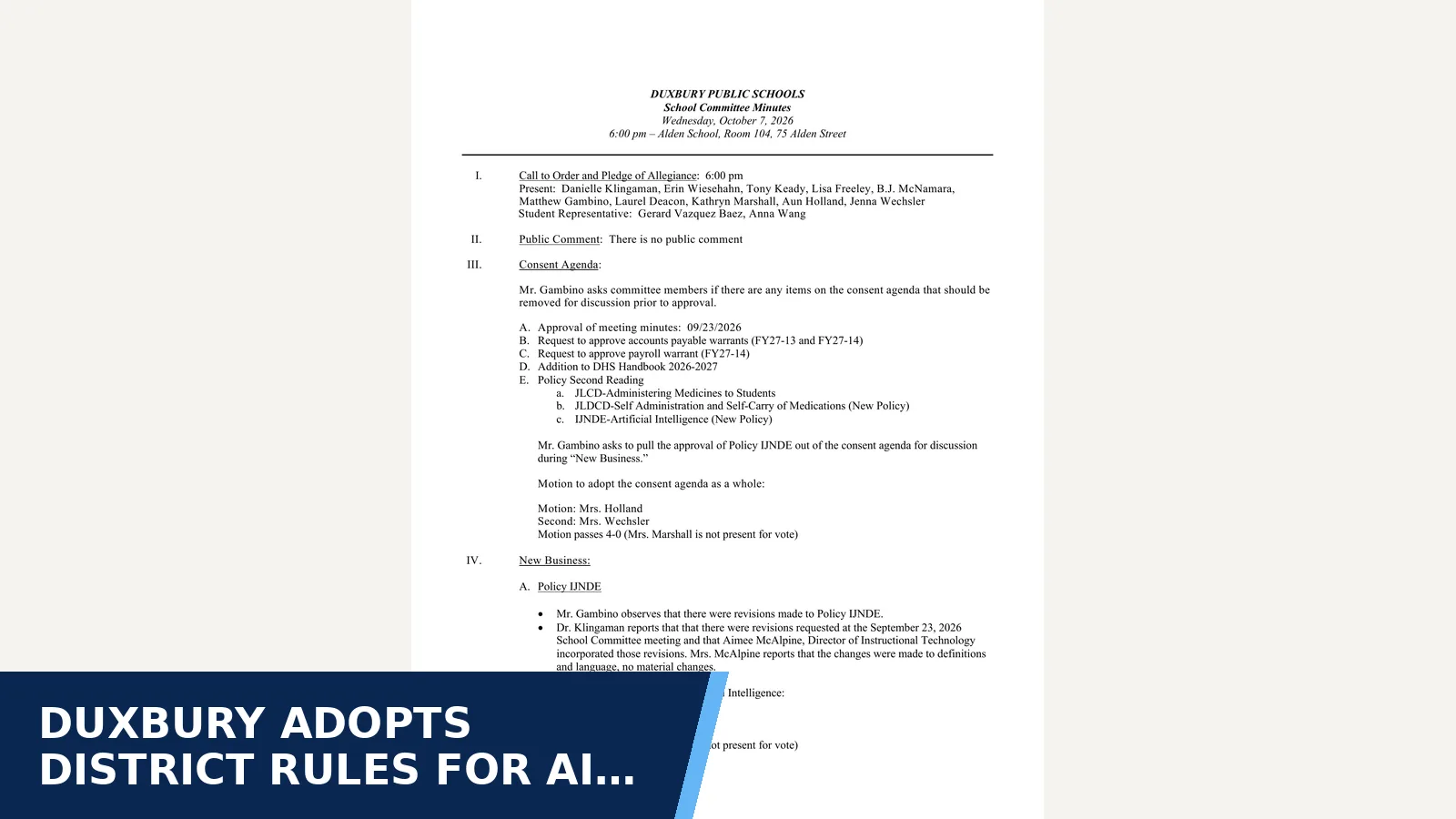
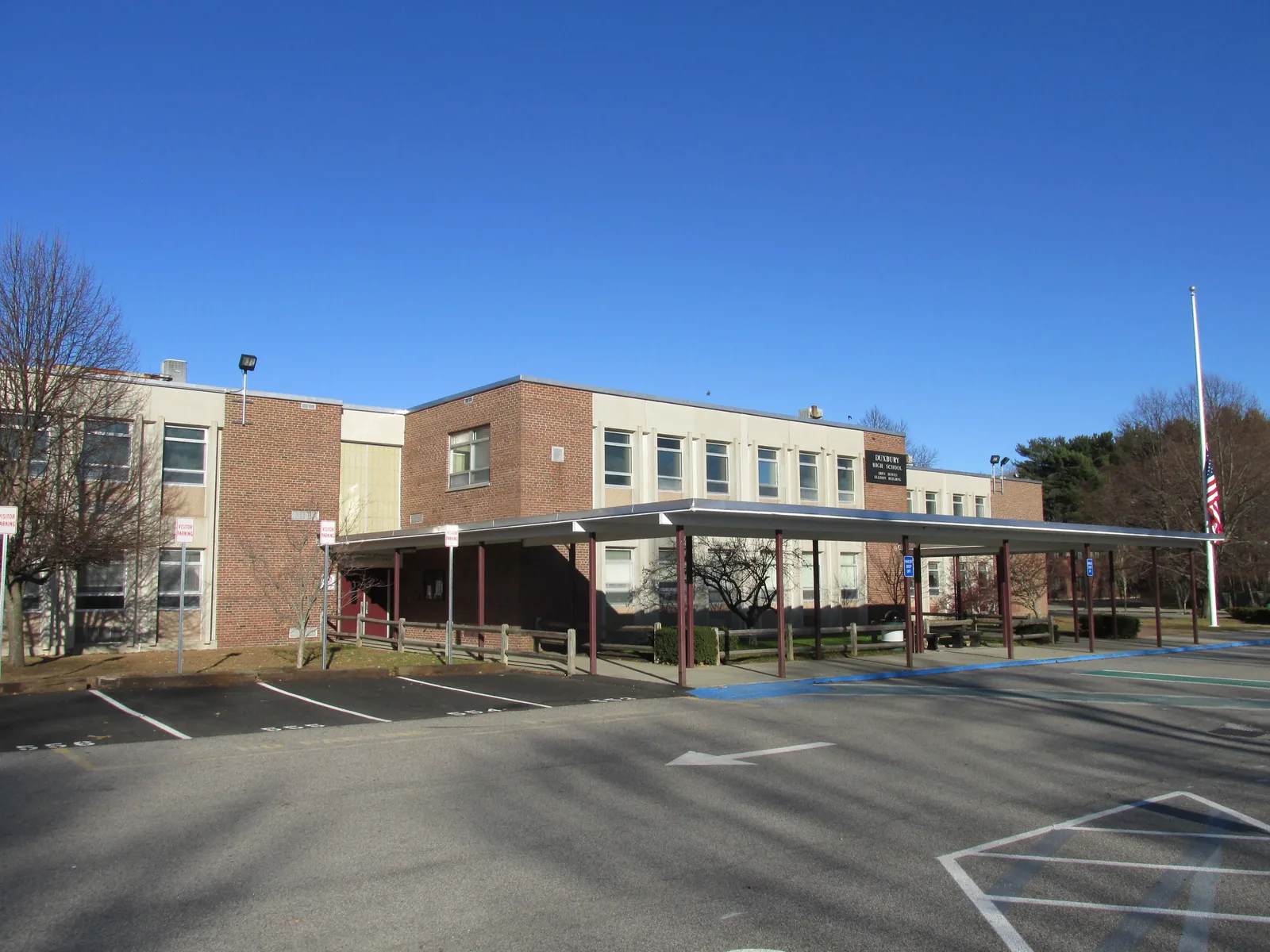
Duxbury’s School Committee adopted the district’s first artificial-intelligence policy, turning a proposal from September into an approved rule. The policy covers responsible AI use and calls for age-appropriate AI literacy instruction for students; violations can be handled under existing digital-resource rules and student discipline.
A board resolution declares the district a Safe Zone. Staff must ask non-local officers, including ICE, to wait outside and notify the superintendent and district lawyer before any access or release of student information. The district will protect student data, post multilingual notices and train staff yearly. Residents asked on October 7, 2026 for regular progress reports.
The Board agenda proposes a first reading of revisions to Board Policy 1312.2 on complaints about instructional materials, with a vote planned for October 21. The proposal would require adopted materials to be factually accurate and aligned with standards, route discriminatory-bias complaints through the district’s uniform complaint process, and clarify that parents may opt students out of specified content.
The School Committee approved updated rules for administering medication and a new policy on students’ self-administration and self-carry of medication. The policies set districtwide expectations for how students may manage medications at school.
Lawrence Public Schools says its civil law-enforcement policy and protocols are posted and is preparing staff training and family communications. The district said staff may decline to engage with officers and defer to an administrator; it is also adding an emergency-guardianship question to enrollment so families can share arrangements schools may need to access.
Acalanes Union High School District
The Oct. 7 agenda scheduled adoption of revisions to Policies 1312.2 and 1312.3 on instructional-material complaints and uniform complaint procedures. The drafts route complaints alleging discriminatory bias through the uniform complaint process and add a parent right to opt a student out of specific content.
Acalanes Union High School District
The Oct. 7 agenda scheduled adoption of a revision to Policy 5145.3 on nondiscrimination and harassment. The accompanying administrative regulation was described as reflecting the Mirabelli v. Bonta decision to ensure parents are not misled about a student’s gender presentation or identity.
Duxbury proposes adding possession of any oral pouch—including caffeine, nicotine, tobacco, or other ingredients—to its student code of conduct. If approved, the amendment would be added immediately to district student handbooks; DHS administrators cite increased use and potential effects including rapid heart rate, nausea, and anxiety.
The board approved Policy KHC, limiting which non-school materials students may carry home. The policy allows school communications and school-related or affiliated activities; community notices may instead be posted with a principal’s prior approval.
Greece Central School District
The district plans to pilot an app and web platform for school news, events, announcements, and secure family-staff messages beginning November 2. The proposed 60-day trial would include Brookside, Athena Middle, and Athena High School; email would remain available, and the district would use family and staff feedback before deciding on any broader rollout.
San Diego Unified School District
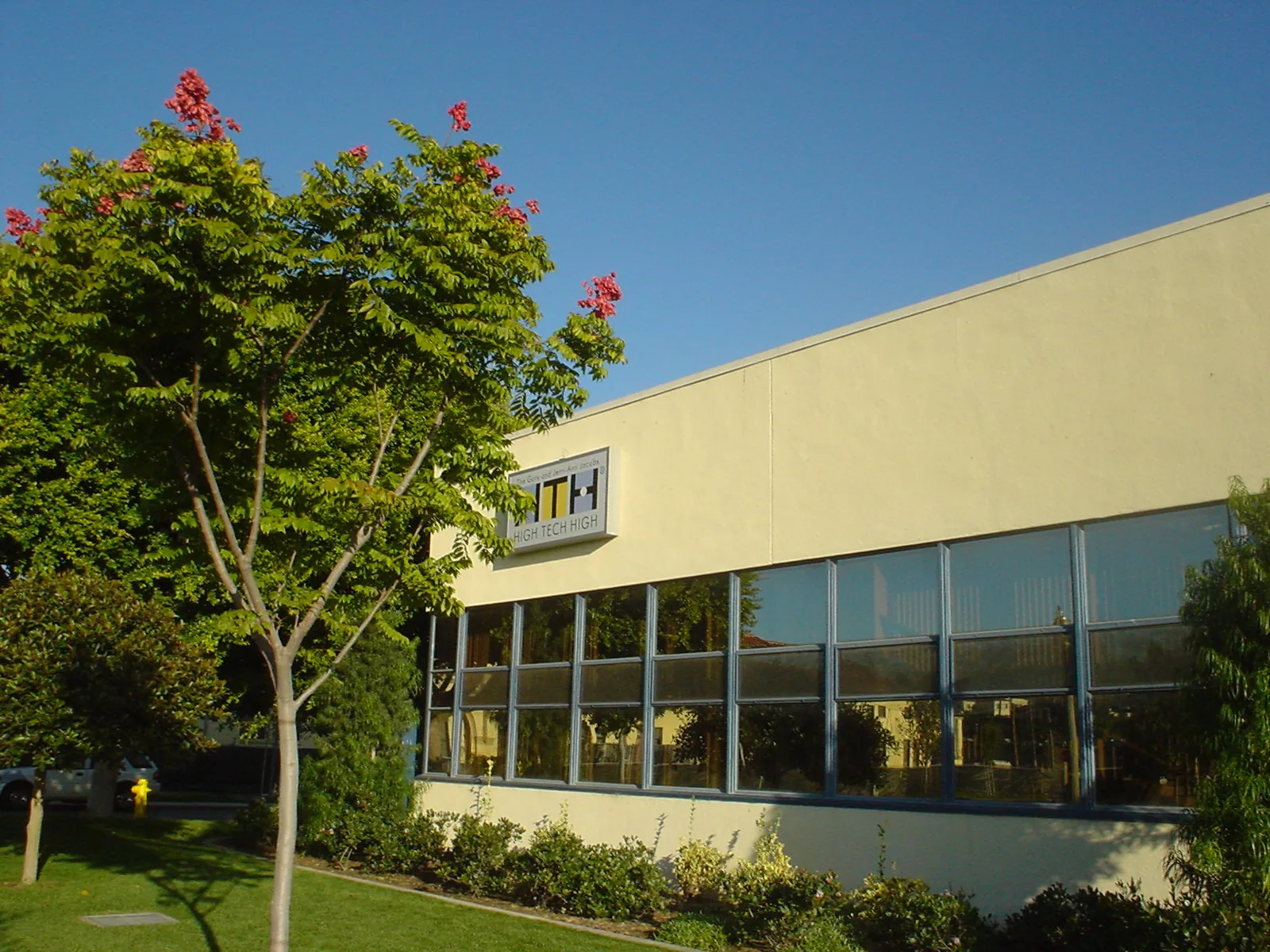
The board renewed High Tech High’s charter and approved a material revision consolidating its seven schools into a single TK–12 charter. This changes the charter structure for the network’s schools, rather than approving an ordinary renewal alone.
Closer to home
Find the stories shaping public education in your state.